How Precision Radiotherapy Is Changing Cancer Treatment for Younger Patients
A child or young adult who needs radiotherapy faces a different calculation from an older patient. Their tissues are still growing, their organs have decades of work ahead of them, and any damage from treatment has far longer to show itself. Radiotherapy has become steadily more exact over the past twenty years, and one method in particular, which uses protons instead of X-rays, has been built around those concerns.
Why Radiotherapy Requires Special Consideration for Younger Patients
Standard radiotherapy sends high-energy X-rays through the body to reach a tumour, and normal cells along the way absorb part of the dose. In an older adult, a small dose to nearby tissue is often an acceptable price for treating the cancer. In a child, the same dose can interfere with bone growth, hormone production or brain development, and the effects may not appear until years after treatment ends. Teenagers are a particular concern because they are still growing quickly.
Families often read specialist consultant pages, such as proton beam therapy by Dr James Wilson, alongside hospital leaflets before a first appointment, and the questions that follow tend to concern long-term effects rather than the treatment weeks themselves.
Radiotherapy teams share that focus. Image-guided delivery, tighter margins and custom immobilisation have all reduced the volume of healthy tissue that receives radiation, even with conventional X-rays, and the gap between the two approaches is narrower for many cancers than headlines suggest.
What Research Shows About Proton Beam Therapy for Young Patients
Macmillan Cancer Support’s information on proton beam therapy says the treatment can be better than standard radiotherapy for children, teenagers and young adults, because it reduces the risk of damage to developing or growing cells and can lower the risk of long-term effects on tissue such as the brain or bones. Proton treatment is used for most tumours in young people that need curative radiotherapy.
The examples listed include brain tumours, soft tissue sarcomas such as rhabdomyosarcoma, bone cancers such as Ewing’s sarcoma, some pelvic cancers and some head and neck cancers. Each of these sits close to structures where a stray dose is costly, which is the situation proton treatment was designed for.
Proton treatment may be given on its own or combined with surgery, standard radiotherapy or chemotherapy, and it is sometimes offered within a clinical trial. Standard radiotherapy remains a very effective and safe treatment for most cancers, and its side effects usually ease once treatment ends, so protons are reserved for cases where the extra precision is likely to matter.
The same page is candid about what is not yet known. Proton treatment is still fairly new in the UK, research continues into its long-term benefits, and the differences in late effects compared with standard radiotherapy are not fully mapped. Children and teenagers are more likely than adults to develop late effects after proton treatment because they are still growing, and the risk of a second cancer is lower than with standard radiotherapy but not absent.
How Proton Beam Therapy Is Planned and Prepared
Before the first beam is delivered, a clinical oncologist and a specialist proton team plan treatment for each patient. A family can expect to spend around three to five days at the proton centre for the tests needed, then return home while the plan is prepared, a step that can take three to four weeks. Patients who live far away may stay near the centre once treatment begins, and the centre provides accommodation.
Scans form the base of the plan. A CT scan is usual, and an MRI scan may be added, and the oncologist marks the area to be treated and the healthy tissue to avoid. A physicist works up the plan with the oncologist, and colleagues check it before it is used. A mask or mould may be made to hold the head, neck or a limb still, and tiny skin markings, made only with permission, help the radiographers position the patient accurately every day.
What Children Can Expect During Proton Beam Therapy
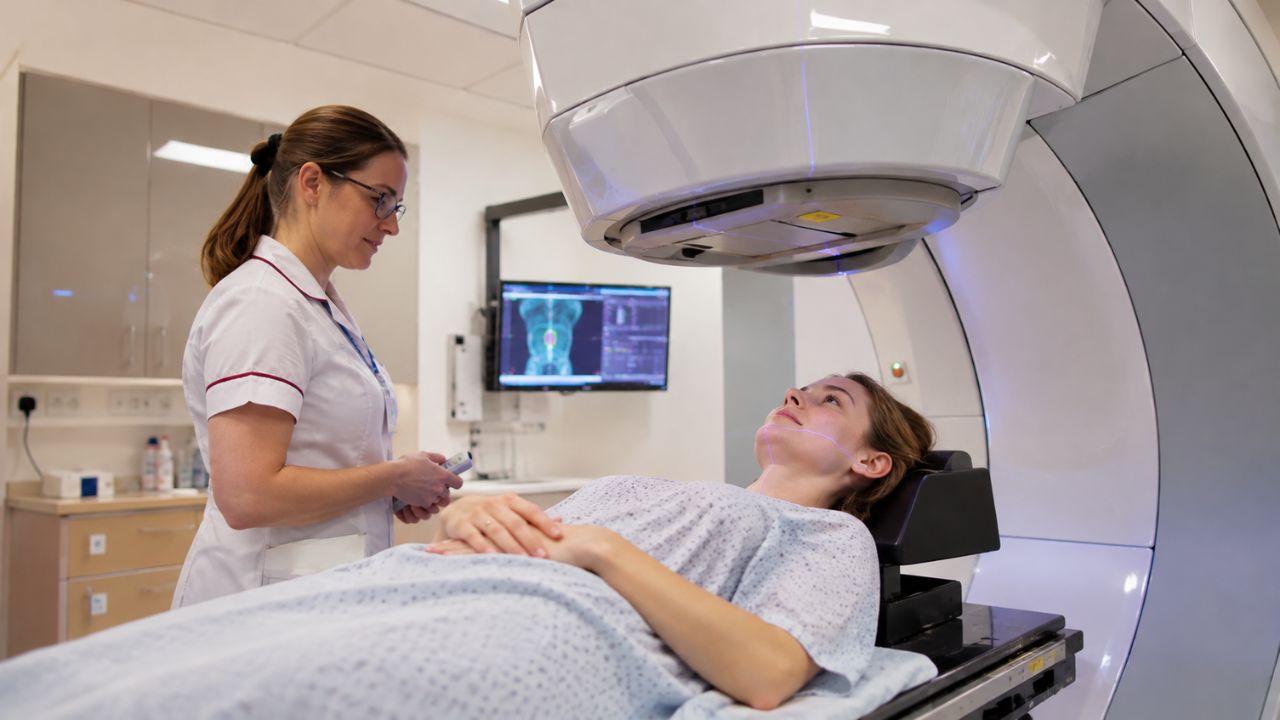
Treatment is usually given as an outpatient on weekdays, with a rest at weekends, and a course normally lasts between three and eight weeks. Appointments often take 30 to 60 minutes, although the beam itself can be on for up to 30 minutes, and most of the time goes on positioning and checks. Imaging before each session confirms that the patient is in the right place.
Staying still is the hardest part for young children, so a general anaesthetic is sometimes used for each session, and may also be offered to a very anxious child. The anaesthetic lasts only a short time. A play specialist sometimes attends to help a child stay calm. Radiographers watch through a camera and talk through an intercom, and the machine never touches the patient.
Proton treatment does not make a person radioactive, so a child can be with siblings and friends throughout. Side effects depend on the area treated and commonly include tiredness and skin reactions, which can be worse with protons than with standard radiotherapy. Hair may be lost in the treated area. Most of these settle within a few weeks of finishing.
Long-Term Effects of Radiotherapy on Education, Fertility and Development
Radiotherapy plans touch more than the tumour. Teenagers and young adults who may want children later should raise fertility before treatment starts, since the options are widest at that point. Anyone who could become pregnant must avoid pregnancy during treatment, and the team will explain how long to wait afterwards.
School and college need a plan as well. A course lasting several weeks, with daily travel or a stay away from home, means missed lessons, and teachers can arrange catch-up work and exam adjustments if they are told early. Long-term follow-up is part of the package, because growth, hormones and learning can change years later, and regular reviews allow problems to be spotted and managed.
Young adults often fall between children’s and adult services, which can leave them without a clear point of contact. Asking the team who coordinates care locally, and whether a youth cancer service is involved, helps fill that gap and gives the patient somewhere to turn with questions between hospital visits.